Creating Defensible Space

Fortifying Your Property, Professional Wildfire Mitigation

 
Axe Contracting specializes in creating defensible spaces, combining safety with aesthetics to ensure your property stands resilient against wildfires. Our expertly crafted defensible spaces are designed to reduce wildfire risks while maintaining the natural beauty of your landscape. Schedule your consultation today to safeguard your home.

Creating Defensible Space

Fire doesn’t discern between a forest and a home. Its path can be unpredictable, but your defense against it shouldn’t be. Creating a defensible space is more than just clearing out vegetation; it’s about designing a protective shield around your property. With Axe Contracting, you’re not just investing in a yard; you’re securing peace of mind.

IBHS-Informed Defensible Space Planning

The Insurance Institute for Business & Home Safety (IBHS) developed the Wildfire Prepared Home™ Technical Standard to help property owners reduce the conditions that contribute to home ignition. Axe Contracting can address the vegetation-management and fuels-reduction portions of an IBHS-informed wildfire mitigation plan, including work prioritized around the 0–5-foot noncombustible zone and the 5–30-foot defensible-space zone. We evaluate vegetation, ladder fuels, overhanging limbs, combustible debris, and spacing around structures, then build a clear scope for the property.

Axe Contracting does not issue Wildfire Prepared Home designations. Final eligibility and designation are determined by the Wildfire Prepared Home program, and insurance requirements or incentives vary by carrier.

Crafting A Resilient Perimeter:

  • Zone Identification:   We divide your property into three defensible zones:

    • Immediate Zone (0-5 feet): Fire-resistant materials and vegetation removal.
    • Intermediate Zone (5-30 feet): Reduced plant density and proper spacing of trees and shrubs.
    • Extended Zone (30-100 feet): Vegetation thinning to prevent fire spread.
  • Vegetation Management:
    Flammable plants are replaced with fire-resistant varieties, balancing safety with natural beauty.
  • Routine Maintenance:
    Annual upkeep ensures debris, overgrown vegetation, and other fire hazards are minimized.
  • Infrastructure Assessment:                                                                                   Structures like fences and decks are evaluated, with recommendations for fire-resistant upgrades to protect your property further.
Aerial drone view of a forestry thinning and land management operation in a wooded area. An orange forestry machine and pickup truck are positioned among leaf-covered trees, with cleared brush and wood debris visible on the forest floor. The image highlights selective vegetation removal and fuels reduction work in a densely wooded landscape.
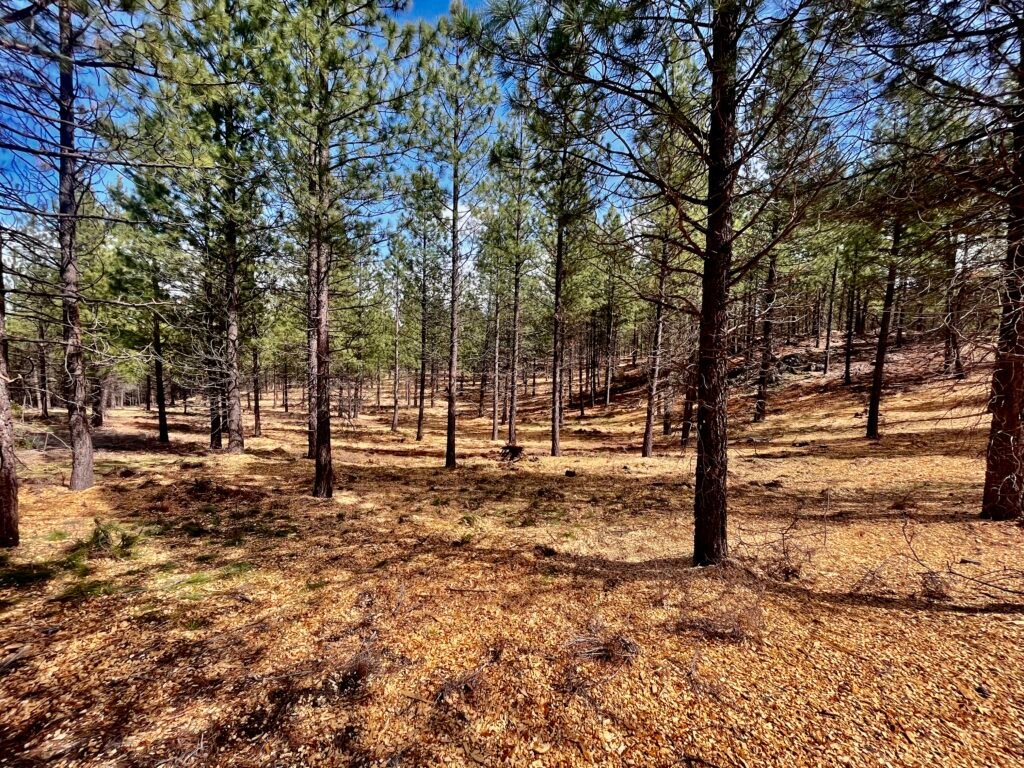
Ponderosa pine woodland after vegetation and debris reduction work in Central Oregon

What to Expect (Our Process)

  1. Schedule a consultation and share your goals, concerns, and timeline.
  2. Site walk and defensible space plan based on layout, access, fuels, and structure locations.
  3. Clear scope and estimate that explains what will be done in each zone.
  4. Treatment and cleanup completed to the agreed scope with a clean finish.
  5. Walkthrough and maintenance guidance so you know what to maintain and when.

FAQ

Have questions about Debris Chipping and Mastication?

How often should I maintain my defensible space?
It’s advisable to inspect and maintain it annually, especially before the fire season. Regular upkeep, like clearing debris, is crucial.
 

While it significantly reduces the risk, no measure can offer a 100% guarantee. However, it vastly improves your home’s chances of withstanding a wildfire.

Costs can vary based on property size and specific requirements. However, considering the safety and peace of mind it provides, many see it as a valuable investment.

Our goal is to blend safety with aesthetics. While some vegetation might be removed or replaced, we aim for a visually pleasing yet safe environment.

Some areas, especially those prone to wildfires, might have regulations. It’s essential to check local guidelines, and our team can assist in ensuring compliance.

The duration can vary based on property size and the scope of work. After the initial assessment, we provide a more precise timeframe.